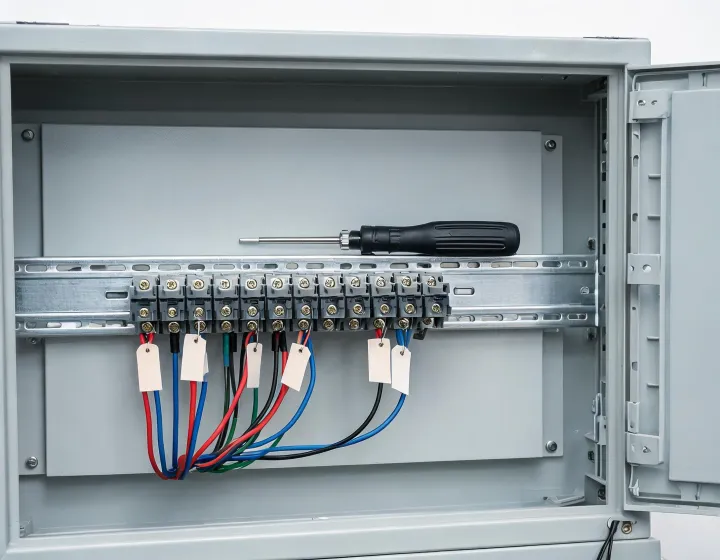
Quote scope for a rail screw terminal
Background: a hut build added a 24-pole screw strip beside a DC plant, using 2.5 mm2 stranded jumpers and a 6 mm2 feeder, on a rail already holding a 2 rack unit patch field. Process: each plant was asked for current at 40 C, voltage with pollution degree, screw torque, whether the end bracket and the jumper bar were included, and the incoming inspection the buyer would run on pole count and plating mark. Result: one offer priced 32 A at 20 C with jumpers excluded, and the other priced 24 A at 40 C with a 10-pole jumper included. The two offers stayed unmerged. No percent gap was published, because the scopes were not the same purchase.
Documents
Current datasheet, rail-foot drawing, and the torque table. If contact resistance is an acceptance limit, ask for the method and the calibration traceability of that reading. A 5 milliohm initial figure is meaningful only with the current used to measure it.
Delivery stages
Sample for fit on the actual rail, then the production lot. Packing should keep poles from losing screws. Mark whether the date on the request is dock date or ship date, and name the US destination city or site code you are allowed to share.
Site constraints
Cabinet depth, finger-safe covers, and ambient. Ingress protection of the terminal is often lower than the cabinet rating. Copy both, and do not let an IP54 enclosure rating replace the terminal rating. Power over Ethernet gear in the same rack can raise the feeder current. Record the PoE budget as a host number so the terminal current is not guessed from the port count.
Managed visibility versus a fixed feeder
Managed network equipment can justify extra monitoring and a specified port policy. That argument matters for the switch, not automatically for the screw terminal that lands its power wires. Unmanaged gear, on the other side, can keep configuration off the connector line when the feeder is a fixed pair. State which side your project is on so plants do not add management licenses to a terminal quote. The dispute is about the host. The terminal still needs conductor, current, voltage, and torque.
New terminals versus surplus terminals: a new date code may carry a full plating callout and an unused screw. A surplus lot may be the only way to hold a legacy pole pitch, but only after condition, screw integrity, and any rework are visible. Connector mating cycle language is a weak fit for a screw terminal that is tightened rather than mated. If a plant still prints a cycle count, ask what motion it counted. LinkScope Sourcing 41 does not grade either path in advance.